Where to stay · Tokyo
Where to Stay in Tokyo for a Group Trip
Tokyo is the world's best food city and one of the hardest to book for a group. The rooms are small, the city is enormous, and the group that doesn't agree on pace will spend the trip on trains. Here's how to pick a hub your whole group can sustain.
By The Trip Test editorial · 8 min read · updated 2026-09-01
The short answer
Shinjuku, Shibuya, Asakusa, and Ginza are the main group-stay hubs in Tokyo. Shinjuku is the all-around base with the best transport and nightlife; Shibuya is the younger, shopping-and-energy hub; Asakusa is the quieter, old-Tokyo base. The real Tokyo rule is room size — hotel rooms are small, and a group of more than three usually needs two adjacent rooms rather than one large suite.
Tokyo is the trip that most rewards planning and most punishes assumptions. Two things catch groups off guard: the room size and the scale. Japanese hotel rooms are small by Western standards, and an Airbnb that sleeps six in one room is rare and often cramped — a group of more than three almost always needs two adjacent rooms. Booking "one big suite for everyone" is the assumption that breaks on arrival.
The scale matters because Tokyo isn't one city — it's a set of distinct hubs connected by an excellent but enormous train network. The neighborhood you base in is the hub you'll return to every night, and the group that disagrees about pace (who wants to walk all day vs. who needs downtime) will spend the trip negotiating which hub to head back to.
The compatibility axes that decide Tokyo are pace and food consensus. Tokyo rewards walkers and food-engaged travelers; it's manageable for a slower group only if you pick a single hub and don't try to cross the whole city daily. The group that agrees on food does extraordinarily well here.
Neighborhoods, by what your group does
Shinjuku
Best for all-around hubThe transit and nightlife center — the busiest train station in the world, surrounded by bars, restaurants, department stores, and the neon version of Tokyo everyone pictures. The all-around base with the best connections to everywhere else.
Compatibility note — Shinjuku is the strongest hub for a group that wants one base and the freedom to go anywhere. The trade-off is sensory density — it's loud, crowded, and easy to get lost in. For a group with an early riser or a low-pace member, the noise is real; the solution is a hotel slightly off the main station, still connected but quieter.
Shibuya
Best for energy + shoppingThe younger hub — the famous scramble crossing, the shopping, and the most energetic version of the city. Denser and younger than Shinjuku, and the base for a group whose plan is the new Tokyo rather than the old.
Compatibility note — Shibuya is right for an energetic, shopping-forward group that wants the most modern version of the city. The trade-off is the same density as Shinjuku with fewer transport lines, so you're a little more locked in. For a group with a pace spread, Shinjuku is the more flexible hub; Shibuya is for a group unanimously on the city's pace.
Asakusa
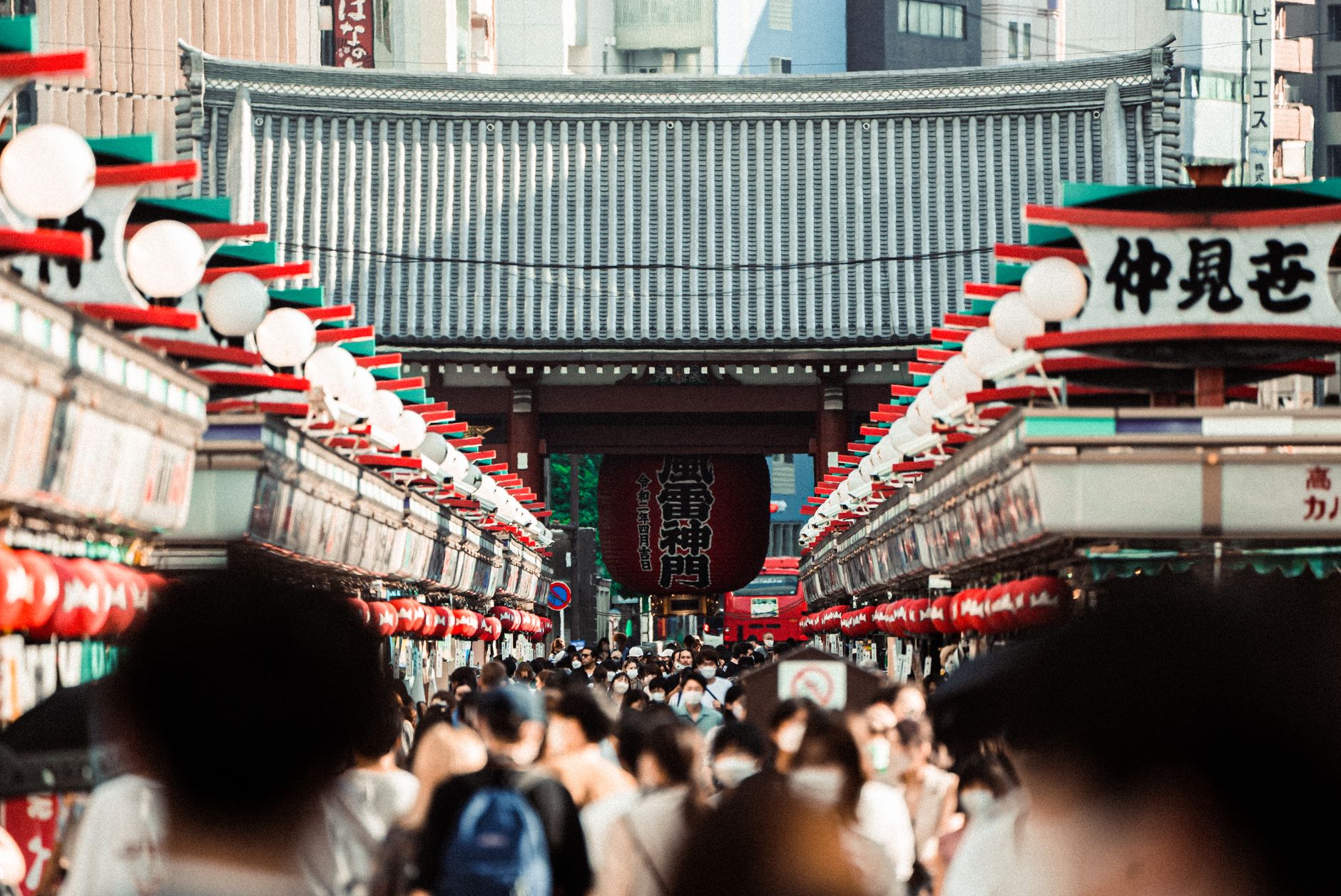
Best for old Tokyo + quieterThe old-Tokyo hub — temples, the old entertainment district, and a slower, more traditional feel on the east side of the city. The base for a group that wants the historic version of Tokyo and a calmer home base.
Compatibility note — Asakusa is the pick for a group that scores lower on nightlife and higher on pace and culture. You're further from the neon hubs, which means more rides — but you come home to quiet, and the old-city atmosphere is genuine. Confirm the group is fine with crossing the city for the modern stuff before basing here.
Ginza
Best for central + refinedThe upscale central hub — high-end shopping, refined dining, and a more polished, less frenetic version of the city, well-connected in the middle of Tokyo. The compromise base that's central without the nightlife density.
Compatibility note — Ginza is the middle ground for a group that wants to be central and connected without sleeping in Shinjuku's neon. It's quieter at night and more upscale, which suits a couples or older group well. The trade-off is price — it's among the pricier bases, so a group with a budget spread should weigh it against Shinjuku or Asakusa.
The Trip Test may earn a commission when you book through certain links, at no additional cost to you. Read our disclosure.
Questions
Can a large group stay in one hotel room in Tokyo?
Usually not comfortably. Japanese hotel rooms are small by Western standards, and large suites that sleep six are rare and expensive. A group of more than three almost always needs two adjacent rooms — book that from the start rather than assuming one big suite, which is the assumption that breaks on arrival.
Where should a group stay in Tokyo for the first time?
Shinjuku is the strongest all-around hub — the best transport connections and a lively base with everything walkable. A group that wants a quieter, more traditional base should take Asakusa; a group that wants upscale and central should take Ginza. Pick one hub and don't try to relocate mid-trip.
Is Tokyo manageable for a slow-paced group?
Yes, if you pick a single hub and don't try to cross the whole city daily. The train network is excellent, but the scale is enormous, and the group that disagrees about pace will spend the trip negotiating where to head back to. Base in one neighborhood and day-trip radially rather than crisscrossing.
Related guides
Before you book the house, see if the group agrees.
The Trip Test surfaces the budget, pace, and space mismatches that decide whether the neighborhood you picked survives contact with the group.
What to do once you've picked where to stay